

Which type of electric fence is suitable for your horse fencing?
Horses have different requirements for a fence than other animal species. Horses are large, powerful animals with a strong flight instinct. In stressful situations, they react instinctively and with great force. That is why it is not only important whether an electric fence is suitable for horses, but also what quality suits the situation in which electric fence is used.
By focusing not on the product itself, but on the characteristics that an electric fence must possess to provide your horse with a safe paddock, it becomes easier to make an informed choice. These characteristics determine how safe a fence is in practice and how well it suits everyday use.
Visibility of the electric fence
Visibility is an essential characteristic of the electric fence for horses. Horses initially recognise a fence visually. The more clearly the electric fence is visible in the landscape, the quicker the horse will recognise and respect it as a boundary. A clearly visible fence reduces the chance of a horse accidentally bumping into it and directly contributes to safety in the paddock.
Wider electric fence, such as tape, rope or equifence, offers better visibility. As a result, horses notice them more quickly. Steel wire or polywire are thinner and therefore less conspicuous. Consequently, horses are less likely to notice them.
Behaviour on contact and escape
No fence can prevent an escape. That is precisely why, with horse fencing, it is important how the electric fence behaves when a horse comes into contact with it. In the event of an escape, the electric fence must break so that the horse does not injure itself on the tape or wire and does not become entangled in the electric fence.
Materials with a larger contact surface, such as conductor tape, equifence and rope, distribute the force more effectively when the horse comes into contact with the fence. This prevents the material from cutting into the skin and reduces the risk of serious injury. These types of electric fence are designed to break in a controlled manner in the event of an escape.An electric fence with a small contact surface, such as polywire, concentrates the forces on a very small point. This can lead to cuts in the event of an escape. Polywire is therefore not suitable as a primary fence for horses. Steel wire is also not suitable as a primary electric fence, due to the risk of injury upon contact or breakage. Steel wire can, however, be used in combination with a wooden fence. It is less suitable for horses as a stand-alone electric fence.
Stability and susceptibility to wind
If an electric fence is susceptible to wind and starts flapping, it can lose its voltage and sag. This increases the risk of a horse becoming entangled in the fence.
The extent to which the electric fence remains taut is closely linked to the quality of the material. Cheaper grades of tape or rope have more stretch and lose their voltage more quickly. High-quality versions with little stretch, such as TurboStar tape, remain tauter and behave more calmly under wind loads. This contributes to a stable and safer fence.
Installation and application
Many electric fences are relatively easy to install, provided the electric fence is fitted correctly and is properly tensioned. Correct tension is essential to maintain the material’s properties and to create a safe fence.
Equifence requires greater precision during installation and is specifically intended for permanent fences. It is advisable to have Equifence installed by a professional fence fitter to ensure the fence functions correctly and remains safe in the long term.
Permanent or temporary use of electric fence
For permanent fences, a higher quality of electric fence wire is generally required. The material must be highly resistant to UV radiation and weather conditions. It must also show minimal stretch, so that it remains taut for a long time and requires little maintenance. Equifence and 40mm tape are intended exclusively for permanent use. 12.5mm and 20mm tape and rope can be used for both mobile and permanent fences.

Electric fence that is less suitable for horses
Not all types of electric fence are suitable for use with horses. Polywire and steel wires do not meet the safety requirements applicable to horses. Due to the small contact surface and their behaviour in the event of an escape, these materials pose an increased risk of injury and entanglement. They are therefore not recommended as the primary fence for horses.
Quality comparison
The tables below show the different types of electric fences based on quality. From basic and standard to pro and premium, the options are clearly compared. This helps you determine which quality best suits your situation and intended use.
Cord guides
Economy line |
Powerline |
Turboline |
|---|---|---|
Suitable for horses |
||
Yes |
Yes |
Yes |
Voltage at the start of the fence |
||
8000V |
8000V |
8000V |
Voltage after 100 metres |
||
4700V |
6000V |
8000V |
Voltage after 500 metres |
||
2000V |
4500V |
7500V |
Voltage after 1000 metres |
||
1000V |
2500V |
7000V |
UV warranty |
||
3 years |
5 years |
7 years |
Recommended fence length |
||
<500m |
<500m |
>500m |
Item numbers |
||
063918 |
063963 |
057856 |
063932 |
072460 |
056101 |
063925 |
063956 |
058006 |
063949 |
072453 |
057993 |
Tape guides
Powerline |
Turboline |
TurboStar |
|---|---|---|
Suitable for horses |
||
Yes |
Yes |
Yes |
Voltage at the start of the fence |
||
8000V |
8000V |
8000V |
Voltage after 100 metres |
||
6000V |
7600V |
8000V |
Voltage after 500 metres |
||
4400V - 4500V |
6400V |
7500V |
Voltage after 1000 metres |
||
2300V - 2500V |
5300V |
7000V |
UV warranty |
||
5 years |
5 years |
7 years |
Recommended fence length |
||
<500m |
<500m |
>500m |
Item numbers |
||
062303 |
076232 |
072439 |
06237 |
086231 |
010608 |
106236 |
079391 |
070862 |
006246 |
086306 |
072446 |
060696 |
007608 |
010615 |
060702 |
070879 |
|
007592 |
010516 |
|
Equifence guides
TurboStar Equifence |
Equifence 7,5/2,5mm HT |
|
|---|---|---|
Suitable for horses |
||
Yes |
Yes |
|
Voltage at the start of the fence |
||
8000V |
8000V |
|
Voltage after 100 metres |
||
8000V |
8000V |
|
Voltage after 500 metres |
||
7900V |
7800V |
|
Voltage after 1000 metres |
||
7800V |
7500V |
|
UV warranty |
||
10 years |
10 years |
|
Recommended fence length |
||
>500m |
>500m |
|
Item numbers |
||
912042 |
009124 |
|
912240 |
053858 |
|
Polywire guides
Powerline Vidoflex 3 |
PowerLine Vidoflex 6 |
Turboline Vidoflex 9 |
|---|---|---|
Suitable for horses |
||
No |
No |
No |
Voltage at the start of the fence |
||
8000V |
8000V |
8000V |
Voltage after 100 metres |
||
3600V |
4900V |
7800V |
Voltage after 500 metres |
||
1100V |
2300V |
7000V |
Voltage after 1000 metres |
||
600V |
1400V |
6400V |
UV warranty |
||
5 years |
5 years |
5 years |
Recommended fence length |
||
<500m |
<500m |
>500m |
Item numbers |
||
019335 |
021680 |
011247 |
010554 |
021697 |
011254 |
063987 |
063970 |
049028 |
072422 |
054862 |
|
075775 |
||
086290 |
||
092352 |
||
Electric Fence Conductors for Horses
Buy high-quality Gallagher fence wire, tape and conductors for horses, quick and easy online.

- Suitable for short distances
- For permanent and mobile fences
- Braided structure for high durability
Content: 200 meter (€0.35 / 1 meter)

- Suitable for both short and long distances
- For permanent and mobile fences
- Good conduction through 2 copper wires
Content: 400 meter (€0.15 / 1 meter)
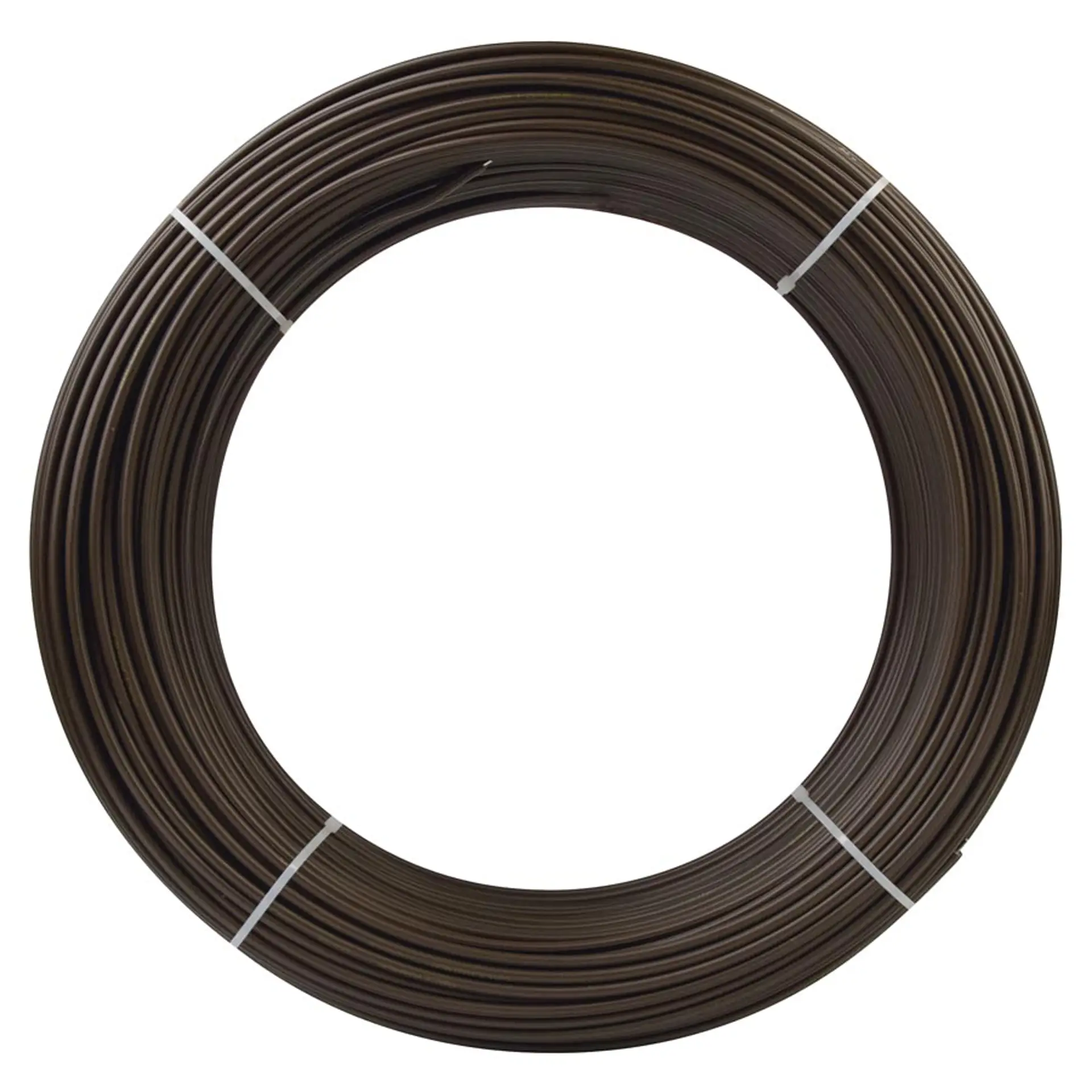
- Safe horse fence
- Very low maintenance and durable
- Optimal conduction due to 2.5 mm thick core
Content: 250 meter (€1.32 / 1 meter)

- Suitable for short distances
- For permanent fences
- Excellent conductivity due to copper wire
Content: 200 meter (€0.36 / 1 meter)