

Measuring is knowing. By regularly checking your fence and measuring how much current is actually running through the wire, you’ll avoid any nasty surprises. But which tester do you need? For a quick check, a simple neontester may be sufficient, whilst regular and more thorough checks require a more advanced tester. In this article, we compare the different testers so that you know which one is best suited to your needs.
Why testing is so important
When you test your fence, you know exactly how it’s performing at that moment. At the same time, the last time you performed measuring is also the last update you received. In the meantime, vegetation can cause a loss of voltage, or other issues may arise that lead to a short circuit or loss of voltage. That is why it is important to perform regular measuring, so that you always have the most up-to-date status of the fence. Gallagher therefore recommends checking your fences at least once a week.
Do you want to stay constantly informed about the status of your fences? Then choose an i Series energiser. Via the Gallagher app, you’ll have 24/7 access to the status of your fences.

Neontester
The neontester is suitable for users who want to quickly check whether there is (sufficient) voltage on a fence. When two or more lights are lit, there is usually sufficient voltage for the fence to function properly.
What are the advantages of the neontester:
- No battery is required.
- Very easy to use.
- Affordable entry-level solution.
When should you choose a neontester?
The neontester is ideal when you want to quickly check whether there is sufficient voltage on your fence, without needing exact readings. It is a simple and user-friendly solution for routine checks of the fence.
When should you not choose a neontester?
If you want to measure the exact voltage, check the energiser or the earthing, or specifically look for faults in the fence, a neontester does not offer sufficient capabilities.

Digital Voltmeter
If you want to measure the exact voltage on the fence, the digital voltmeter is the right choice. You can read the values in kilovolts (kV) on the digital display.
What are the advantages of the digital fence voltmeter:
- Accurately measures the voltage in kV.
- Suitable for testing the fence, the energiser and the earthing.
- Provides greater insight into the performance of the entire fencing system.
When should you choose a digital fence voltmeter?
The digital fence voltmeter is the right choice if you want to know more than just whether there is voltage on the fence. With this tester, you can accurately check the voltage on the fence, the energiser and the earthing connection, enabling you to better assess the system’s performance. This gives you a more complete picture of your fence’s performance than a neontester would provide.
When should you not choose a digital voltmeter?
If you want not only to measure but also to quickly locate faults and identify where energy is being lost, a digital voltmeter does not provide sufficient insight.

Fault Finder
The Fault Finder is the ideal solution for users who want maximum control over their fence and wish to detect faults quickly. The main difference between the Fault Finder and other testers is that, in addition to voltage, this device also measures current (amps). This gives you insight into the load on the fence and enables you to detect faults more quickly.
What are the advantages of the Fault Finder:
- Measures both voltage and current on the fence.
- Helps to detect faults more quickly by displaying the direction of current flow.
- Provides the most comprehensive insight into the condition and performance of the fence.
When should you choose a fault finder?
The fault finder is the best choice if you want maximum control over your fence and to be able to quickly identify where energy is being lost. Particularly with large fences, measuring both voltage and current provides valuable insights that you cannot obtain with a standard tester.
When should you not choose a fault finder?
If your main aim is simply to check whether there is sufficient voltage on the fence or to test the electric fence energiser and earthing from time to time, a fault finder is often more than you need. In such situations, a digital fence voltmeter usually provides sufficient information at a lower cost.
Regular testing
By testing your fences regularly, you can keep track of their performance. Whether you choose a neontester, a digital fence voltmeter or a fault finder, the most important thing is that you carry out regular checks and identify any anomalies in good time. This ensures you won’t be faced with any surprises.
In the table below, we’ve summarised the different testers for you. This will help you choose the tester that best suits your situation.
Functionality |
Neontester |
Digital fence voltmeter |
Fault finder |
|---|---|---|---|
Suitable for quick checks | ✓ | ✓ | ✓ |
Checking fence voltage | ✓ | ✓ | ✓ |
Precise voltage reading | − | ✓ | ✓ |
Measuring energisers | − | ✓ | ✓ |
Testing earthing | − | ✓ | ✓ |
Measuring current | − | − | ✓ |
Detecting faults | − | − | ✓ |
Indicating the direction of a fault | − | − | ✓ |
No battery required | ✓ | − | − |
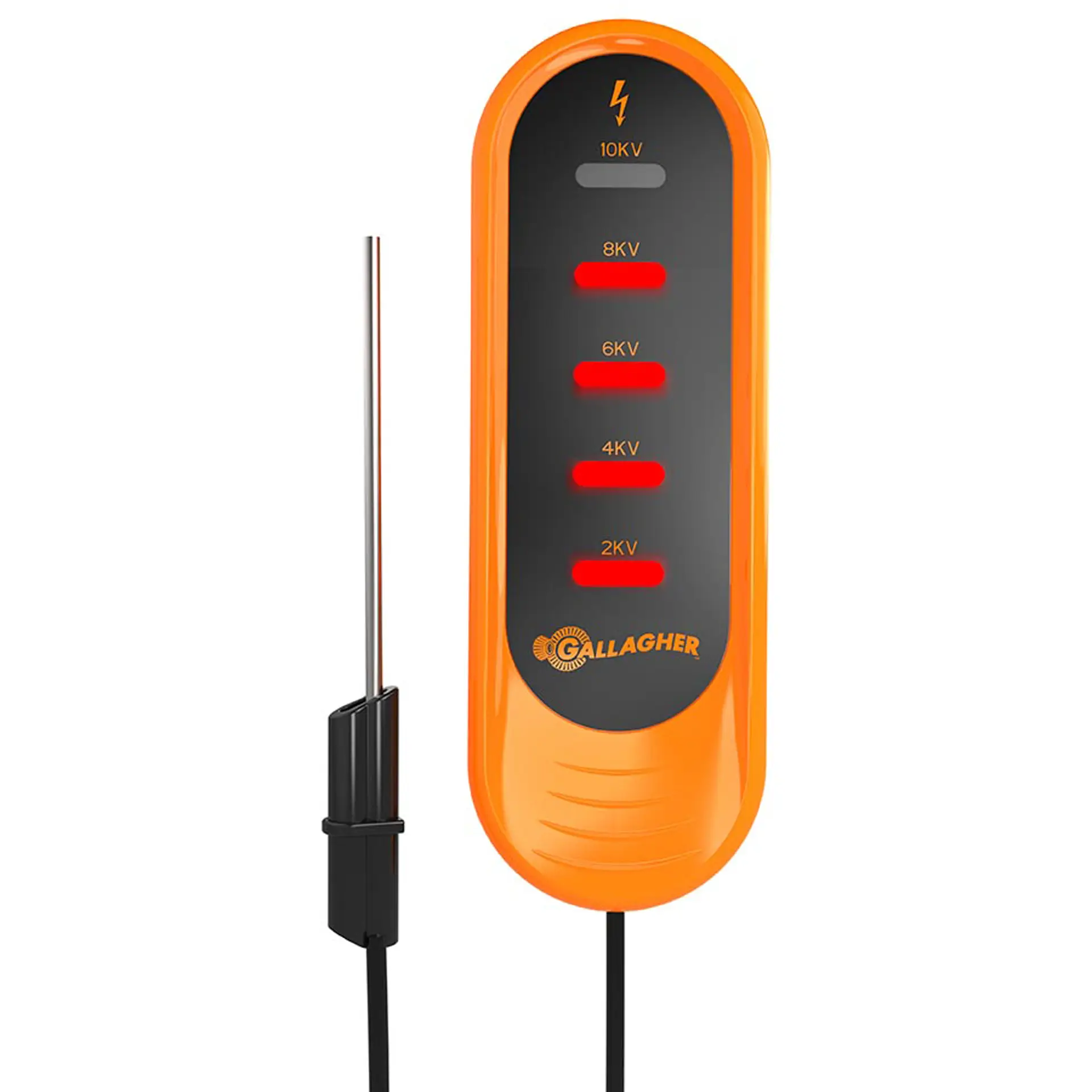
- Checks voltage with 5 neon lights
- Operates without batteries
- Durable design with earth stake and 1.65 m wire
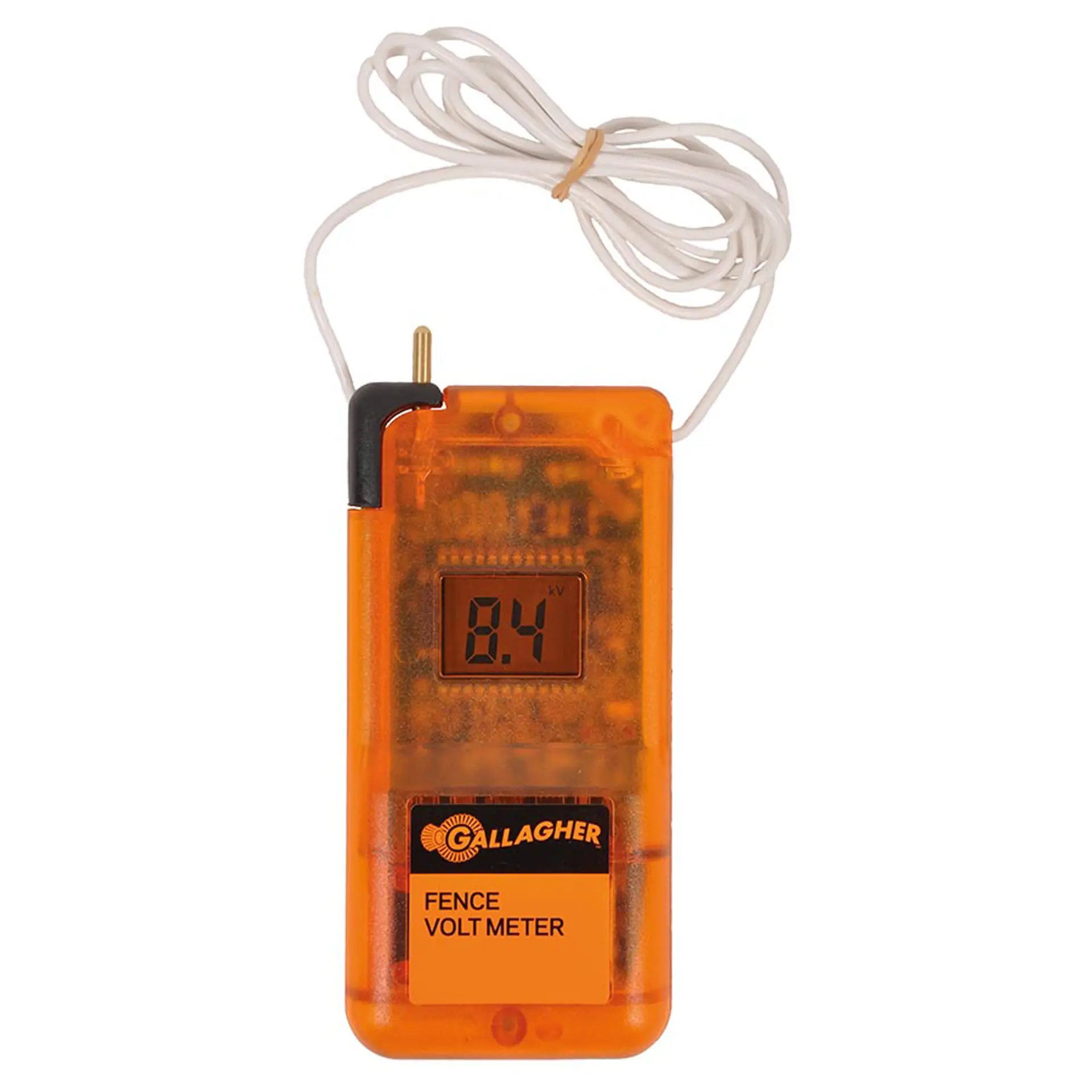
- Accurate voltage measurement up to 12,000 volts
- Suitable for fence, energiser and earthing
- Compact and durable design
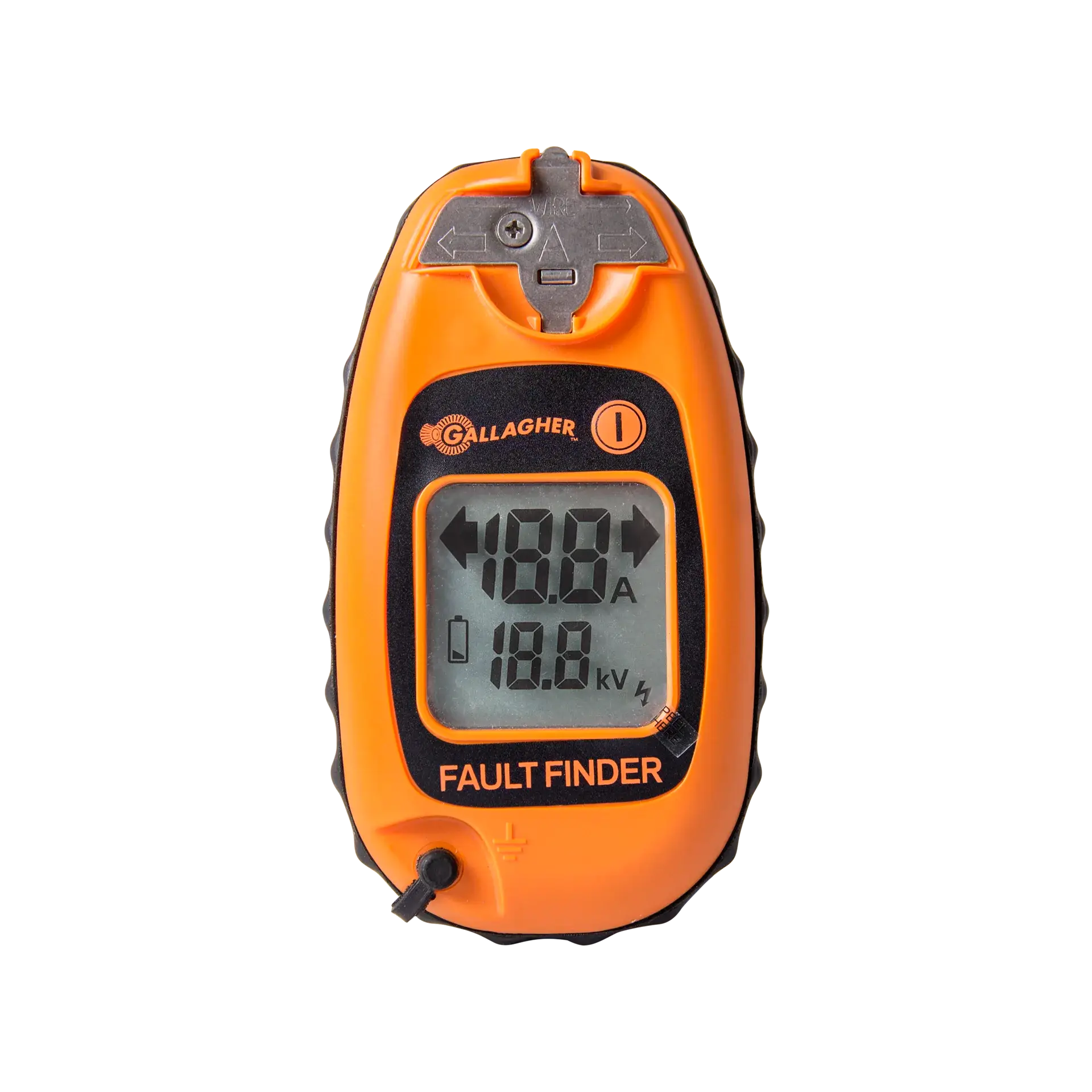
- Measures voltage (0.2-15 kV) and current (1-99 A)
- Displays current direction for quick fault location
- Self-earthing via thumb, no earth stake needed for wire measurements